Central Asia in Transformation, A Geneva Round Table
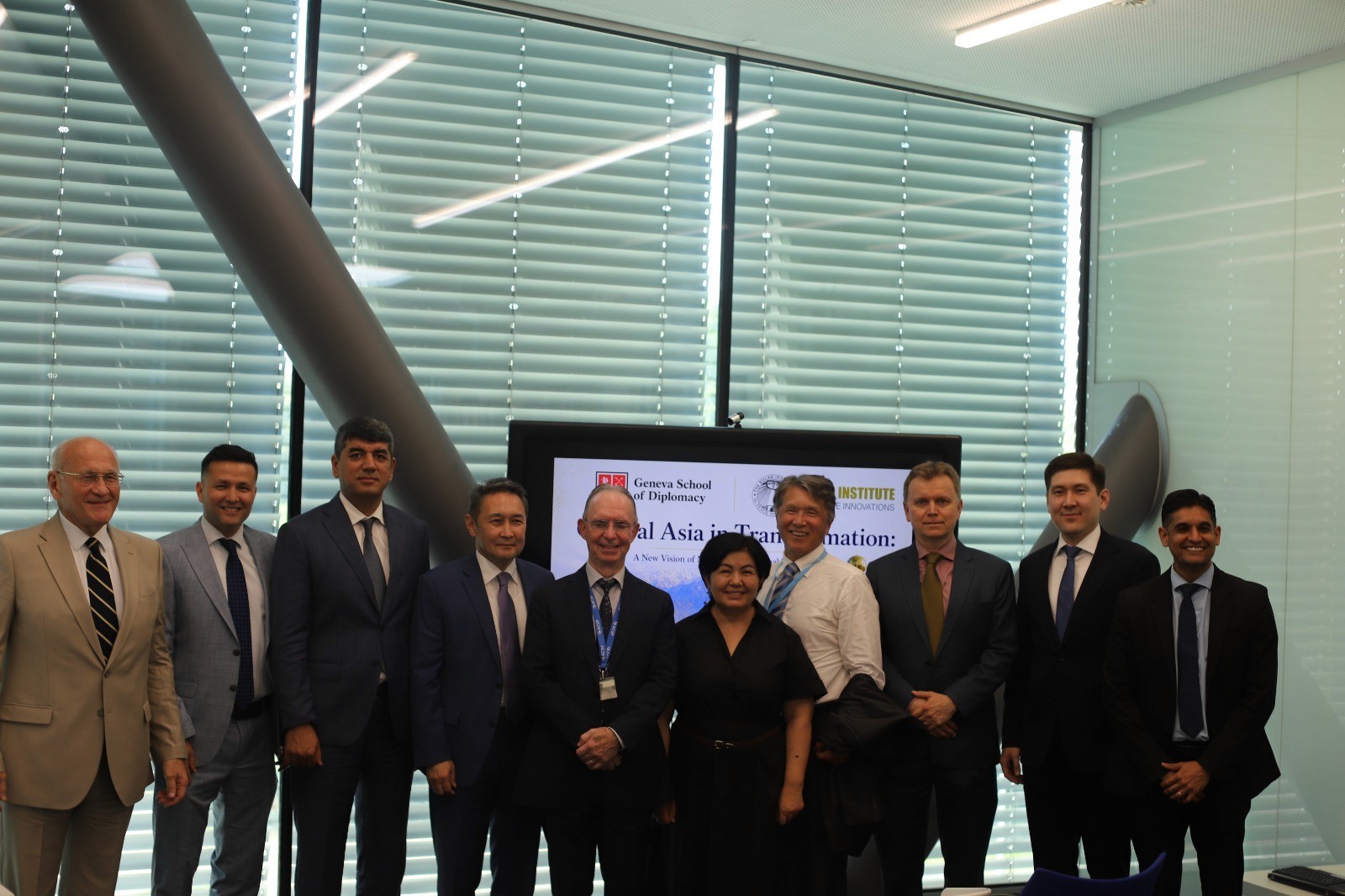
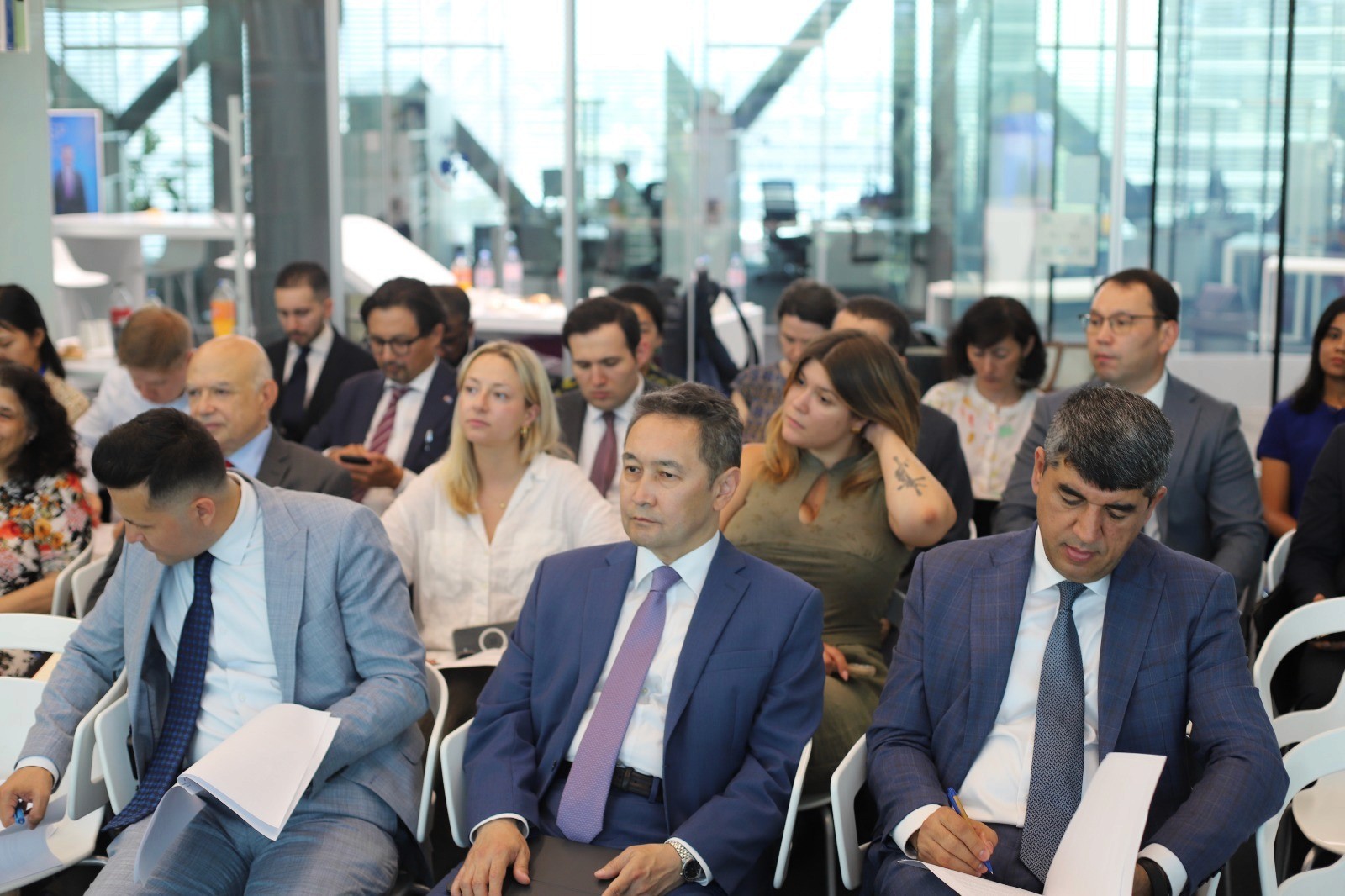
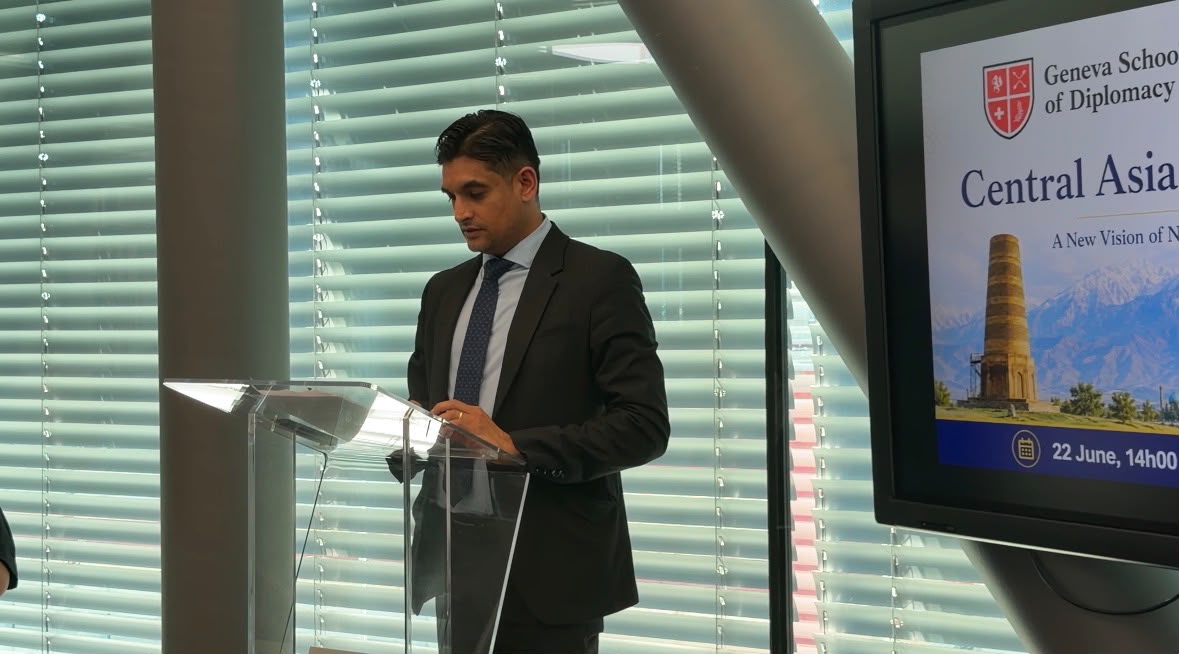
On 22 June 2026, the Bulan Institute for Peace Innovations and the Geneva School of Diplomacy and International Relations co-organized a high-level round table in Geneva titled “Central Asia in Transformation: A New Vision of National and Regional Development.” The event took place at the Geneva Centre for Security Policy (GCSP), bringing together ambassadors, diplomats, experts, academics, representatives of international organizations, civil society actors, and Geneva-based policy professionals for a timely discussion on the evolving role of Central Asia in a changing world.
The round table was organized at a moment when Central Asia is receiving growing international attention. The region, comprising Kazakhstan, Kyrgyzstan, Tajikistan, Turkmenistan, and Uzbekistan, is increasingly recognized for its strategic location, young populations, natural resources, development potential, and growing role in regional and global connectivity. Situated between Europe, Russia, China, South Asia, and the Middle East, Central Asia has become an important space for dialogue on governance, development, energy, trade, climate resilience, transport corridors, regional security, and international cooperation.
The event opened with remarks by the Ambassadors and Permanent Representatives of Central Asian countries in Geneva. The Bulan Institute was honoured to welcome opening remarks from H.E. Mr Kairat Sarzhanov, Ambassador Extraordinary and Plenipotentiary of the Republic of Kazakhstan to the Swiss Confederation and Liechtenstein; H.E. Ambassador Omar Sultanov, Permanent Representative of Kyrgyzstan to the United Nations Office at Geneva; H.E. Mr Sharaf Sheralizoda, Permanent Representative of Tajikistan to the United Nations Office at Geneva; and H.E. Ambassador Eldiyor Toshmatov, Permanent Representative of Uzbekistan to the United Nations Office at Geneva. Welcoming remarks were also delivered by Mr Paul Dziatkowiec, Director of Mediation and Peace Support at the Geneva Centre for Security Policy.
A key message emerged strongly from the opening session: Central Asia is undergoing a profound transformation, and the countries of the region are more connected, cooperative, and united than ever before. Speakers emphasized that while each country has its own national reform path and development priorities, the region as a whole is becoming more visible and more active in international affairs.
The discussion highlighted the major transformations taking place across Central Asia, including governance reforms, institutional modernization, economic diversification, digital transformation, education, infrastructure development, energy transition, and investment in human capital. Participants also reflected on the region’s growing role in international cooperation, particularly in relation to transport corridors, trade, energy security, water management, climate change, critical raw materials, migration, and regional stability.
The expert presentations provided further analysis of regional dynamics and development trends. Mr Sapargali Shalgimbaev, President of CFive and representative of Astana International University, presented Central Asia as a region of growing opportunities, highlighting its population of more than 80 million people, combined GDP of over USD 500 billion, and strategic position as a bridge between Europe and Asia. His presentation emphasized that in a context of geopolitical uncertainty, fragmented supply chains, and growing competition for investment and technology, strong institutions and regional integration are becoming decisive factors for economic competitiveness and long-term stability.
Mr Shalgimbaev also reflected on Kazakhstan’s reform journey, noting the importance of constitutional reform, institutional modernization, legal frameworks, public accountability, and implementation. His presentation underlined that reforms are moving from political decisions toward institutional transformation, and that predictable rules, trust, and strong institutions are essential for attracting investment and building economic growth. This perspective connected national reform agendas with the wider regional need for resilience, cooperation, and sustainable development.
In particular, Mr Shalgimbaev presented Kazakhstan’s reform journey as a three-stage process moving from a constitutional referendum, to constitutional legislation, and then to institutional implementation. He emphasized that the reform process is not limited to political declarations, but is intended to translate a national vision into a legal framework and then into functioning institutions and concrete results. His presentation highlighted several key constitutional reforms, including enhanced public accountability, a stronger role for citizens and civil society in governance, a new legislative architecture, safeguards for digital rights, support for human capital, strengthened human rights guarantees, and the protection of intellectual property and creativity. These reforms were presented as part of Kazakhstan’s broader effort to build stronger institutions, modernize governance, and create a foundation for sustainable development and long-term prosperity.
Another important theme of the discussion was the shift from competition to cooperation in Central Asia. The presentations and exchanges showed that the countries of the region increasingly face shared challenges and shared opportunities. Regional integration, people-to-people connections, infrastructure development, transport corridors, energy cooperation, and digital transformation were identified as key areas where Central Asian states can achieve more together than separately. Particular attention was given to the Middle Corridor as one of the important routes connecting Asia and Europe, strengthening trade, logistics, and regional connectivity.
Mr David Chikvaidze, Vice-President of the Swiss Forum on International Affairs and Associate Director of Strategia Worldwide, offered reflections on regional cooperation, international affairs, and the importance of dialogue in strengthening understanding of Central Asia. Mr Vladimir Norov, former Minister of Foreign Affairs of Uzbekistan, joined the discussion online and contributed his perspective on regional development, diplomacy, and Central Asia’s international role.
A special focus was also given to Kyrgyzstan’s candidacy for a non-permanent seat on the United Nations Security Council. H.E. Ambassador Omar Sultanov delivered opening remarks on this important diplomatic objective, underlining how such membership could serve not only Kyrgyzstan, but also contribute to strengthening the voice and visibility of Central Asia as a whole within the international system. Participants discussed how Central Asian countries can use multilateral platforms more actively to advance regional perspectives, contribute to global dialogue, and support peace, security, and sustainable development.
The round table also explored how Central Asia is navigating a rapidly changing global environment. Participants discussed the region’s relationships with Europe, China, Türkiye, the Gulf countries, and multilateral institutions, as well as the importance of strengthening regional cooperation from within. In this context, Central Asia was not presented as a peripheral region, but as an increasingly important actor in global discussions on connectivity, development, energy, climate resilience, and international cooperation.
For the Bulan Institute, the event was also an important step in bringing Central Asia more actively into the agenda of International Geneva. Geneva is a global hub for diplomacy, human rights, humanitarian action, development, trade, peacebuilding, and climate-related dialogue. Yet Central Asia remains underrepresented in many Geneva-based policy conversations. This round table aimed to help fill that gap by creating a constructive platform for dialogue between Central Asian representatives and Geneva’s international policy community.
The discussion was rich, open, and engaging. It demonstrated the strong interest that exists in Geneva for a deeper understanding of Central Asia’s transformation, as well as the need for continued dialogue on the region’s development pathways and international partnerships. The diversity of participants — including ambassadors, diplomats, experts, international organizations, academics, and civil society representatives — contributed to a vibrant exchange of perspectives.
The Bulan Institute for Peace Innovations and the Geneva School of Diplomacy and International Relations express their sincere gratitude to all speakers, participants, and partners who contributed to the success of the event. Special thanks go to the Geneva Centre for Security Policy for hosting the round table, and to the Ambassadors and Permanent Representatives of Central Asian countries for their valuable contributions.
The event reaffirmed a clear message: Central Asia is in transformation, increasingly united, and actively shaping its place in a changing world. Its voice deserves to be heard more strongly in International Geneva. The Bulan Institute will continue working to create spaces for dialogue, cooperation, and understanding between Central Asia and the international community.
Copyright © 2025 Bulan Institute
Copyright © 2025 Bulan Institute
Copyright © 2025 Bulan Institute